Lost Dog UK: Exactly What to Do in the First 24 Hours

If your dog goes missing in the UK, search the spot where they were last seen straight away, then within a couple of hours report them to your local council’s dog warden, nearby vets and your microchip database, and get the word out locally. Acting quickly and methodically gives you the best chance of getting them home. Here is what to do, hour by hour.
From Steve: If Charlie went missing, the first two things I'd do are switch on Lost Mode and post in our local Facebook lost-pet groups. Both take a minute and reach people nearby straight away.
Immediately: Search the area
Start close to where your dog was last seen and work outward. Call their name calmly — a panicked tone can make a scared dog run further. Bring treats or a favourite toy. If they bolted after a disturbance (fireworks, a loud noise), check any hiding spots nearby: under hedges, behind garden sheds, in neighbouring gardens.
If you can, have one person stay at home or at the place your dog went missing. Many dogs find their own way back, and it helps if someone is there when they do.
Within the hour: Tell your neighbours
Knock on doors immediately around the area. Ask people to check their gardens and sheds. A dog can take shelter in an open garage or outbuilding within minutes of going missing. Leave a photo with your contact number.
Within 2 hours: who should you report a lost dog to?
Contact these organisations as soon as possible:
- Your local council’s dog warden — in England, Wales and Scotland, stray dogs are the council’s job, not the police’s. Report your dog as missing; if a warden picks them up, they check missing reports first. Your council website has the number, and GOV.UK’s “report a stray dog” service will point you to the right council.
- All nearby vets — ring every practice within a few miles. Dogs are often brought in by well-meaning members of the public, and vets scan for a microchip.
- Your microchip database — report your dog as missing with whichever database their chip is registered on, and check your phone number and address are current. If you don’t know which database it is, GOV.UK has a tool to find out.
- Local rescue centres and boarding kennels — many councils use a private kennel to hold strays. Ring ahead; do not just show up.
- Lost and found pet websites — register your dog on a UK lost-pet website so people who find a dog can match it to yours.
What happens if the council picks up your dog?
Under section 149 of the Environmental Protection Act 1990, a council’s dog warden can seize and hold a dog they believe is a stray. If your dog’s collar shows an address, the council must write to you to say where your dog is. If the dog isn’t claimed within seven clear days of that notice, the council can rehome it — and you’ll need to pay the council’s costs to get your dog back. So ring the warden every day, not just once, and check with any kennel they use.
This is also why the law requires a collar tag with your name and address: it’s how the council knows who to contact.
Within 3 hours: Get the word out online
Post in every relevant group you can find:
- Facebook groups: search “[your town] lost and found pets”, “[your town] dogs”, “[your town] community”
- Nextdoor — post in your local area
- X and Instagram — use local hashtags
Include a clear recent photo, the location where they went missing, their name, and your phone number. Share the post widely and ask friends to share too. Leave out details only you would know (a scar, a quirk) so you can check anyone who claims to have found your dog.
Print and distribute posters
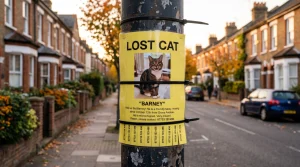
A clear A4 poster with a photo, your phone number, and the word MISSING in large text can be printed quickly and posted on lamp posts, community boards, shop windows, and vet noticeboards. Ask local shops and cafes to put one in their window. Taggzi creates a printable lost poster for you when you switch on Lost Mode.
Keep searching
Dogs on the run often travel further than owners expect, especially if frightened. Revisit the area at dawn and dusk, when it’s quieter. Leave an item of your clothing near where they were last seen; the familiar scent can help a scared dog stay in the area or return.
If your dog is nervous, don’t chase them if you see them, and ask others not to either. A frightened dog may run from anyone, even their owner. Crouch down, keep still and let them come to you.
What if you think your dog was stolen?
If there are signs your dog was taken — a cut lead, an open gate that was locked, a witness — report it to the police on 101 and get a crime reference number. Tell your microchip database that your dog may have been stolen, and keep posting on lost-dog groups: stolen dogs are sometimes dumped or sold on, and a scan by a vet can still trace them back to you.
How a Taggzi helps
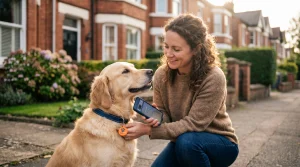
If your dog has a Taggzi, any finder can tap the tag with their phone or scan its QR code and reach you within seconds — even if your dog is found miles away at 2am. They don’t need an app, and they can message you without your number on show unless you choose to show it.
When you switch on Lost Mode, your dog’s profile page changes to an emergency view, you get a printable poster, and people nearby who have signed up for free community lost-pet alerts are told to look out for your dog. With Taggzi Pro you also get an instant scan alert with the approximate location of the scan, and finders can video call you straight from the tag.
When you go to collect your dog, Taggzi Pro subscribers can show their Verified Owner badge in the app — a simple confirmation that you’re the registered account holder behind the tag, before the finder hands over your pet.
Search teams and drones: if your dog is frightened and on the move, read how drone search teams help, and what to do first, written with Ayrshire Drone Dog Rescue.