How to Make a Lost Pet Poster That Actually Gets Results
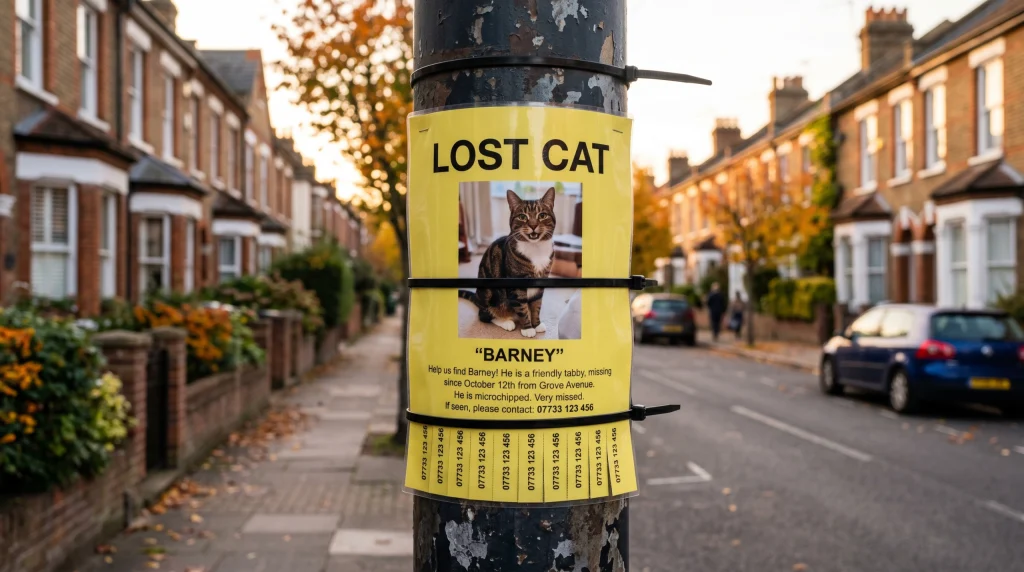
A good lost pet poster has five things: the words LOST DOG or LOST CAT in huge letters, one large clear photo, your pet’s name, where they were last seen, and one phone number in big bold type. Print it on A4 or bigger, protect it from rain, and put it up near where your pet went missing. Here’s how to get each part right.
From Steve: If Charlie went missing, a poster would come after Lost Mode and a post in our local Facebook lost-pet groups, but I'd still put them up: not everyone who walks past is online.
What should a lost pet poster include?
Keep it simple. Someone walking or driving past has a few seconds to take it in:
- LOST DOG / LOST CAT — in the largest text on the page. Don’t make people work to understand what they’re looking at.
- A large, clear photo — ideally filling the top half of the sheet. Use the most recent photo you have that clearly shows the animal’s markings and colour.
- Name — large enough to read at a glance.
- Key distinguishing features — breed, colour, any unusual markings, collar colour.
- Area last seen — include the street name or a landmark, and the date.
- Your phone number — in large, bold text. This is the only call to action that matters.
Which photo should you use?
Use a photo that shows your whole pet, side-on or from the front, in good light. A cute close-up of a face won’t help someone recognise a dog trotting along a verge. If your pet has a marking on one side only, pick a photo that shows it. If you have two good photos, add a smaller second one, but never let it squeeze the main photo.
Photos taken in daylight print far better than ones taken indoors at night. Black and dark brown pets can print as a dark blob, so lighten the photo a little before printing.
What to leave out
Less is more on a poster. Don’t include:
- Long paragraphs about your pet’s personality
- Multiple phone numbers (one is enough — the one you’ll answer)
- Your home address (a safety risk)
- Your pet’s microchip number — a finder doesn’t need it, and a vet or dog warden can scan the chip
- Every identifying detail. Keep back one feature only you would know, such as a small scar, so you can check anyone who says they have your pet.
Should you offer a reward?
It’s your choice. A reward can get people looking, but it can also bring calls from people hoping to cash in. If you offer one, say “Reward offered” rather than an amount, and never pay anything before you have your pet back in front of you.
Design tips that make a real difference
Use high contrast. Black text on a white background, or white text on a solid bright colour. Busy backgrounds and fancy fonts are harder to read from a distance.
Print large. A4 minimum; A3 if your printer or local copy shop can manage it. The phone number should be readable from about 3 metres away.
Protect it from the weather. Rain soon ruins unprotected paper. Laminate posters, or slip them into clear plastic sleeves and seal the top with tape.
Add tear-off strips at the bottom with your number on each one. People who don’t have time to photograph the poster can take a strip with them.
What if your pet is nervous?
If your dog is frightened of strangers, add one clear line: “Nervous — please don’t chase or call. Tell us where you saw them.” A frightened dog can run from anyone, even their owner, and people chasing can push them further away or across a road. You want sightings, not catches. Our guide on why you shouldn’t chase a nervous lost dog explains more.
Where should you put lost pet posters?
Start within 5–6 streets of where your pet was last seen, then widen the area as the days go on. Focus on:
- Lamp posts at eye level — use cable ties, not tape
- Community noticeboards (libraries, community centres, GP surgeries)
- Vet waiting rooms and pet shops — ask permission first
- Local pub, shop and café noticeboards
- Bus shelters, and the routes people walk their dogs
Some councils have rules about fixing signs to lamp posts, so check your council’s website if you’re unsure, and take posters down once your pet is home.
Also post digitally: local Facebook groups, Nextdoor, and pet-specific sites like Doglost.co.uk. A digital post can spread further and faster than any physical poster. If you have lost a dog, report them to your council’s dog warden and your microchip database too: our guide on what to do if your dog goes missing covers each step, and there’s a separate guide on finding a lost cat.
Taggzi makes your lost poster for you
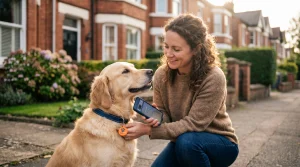
If your pet wears a Taggzi tag, you don’t need to design a poster at all. When you mark your pet as lost, the app offers you a ready-to-print A4 poster, and you can open it again any time from your pet’s page in the app or on the website.
The poster pulls in your pet’s photos and details, where they were last seen, any reward you’ve set, and the contact details you’ve chosen to show. It has tear-off strips at the bottom and a QR code that opens your pet’s lost page. If you’ve ticked “Nervous” in Lost Mode, the poster shows a clear “please don’t approach or chase” warning.
Anyone who scans that QR code sees your pet’s live lost page, where they can message you privately or report a sighting, without needing an app. Print it, protect it from the rain, put it up. Lost Mode and the poster are part of the free plan.
Keep your poster updated
If you’ve had reports of sightings, update your digital posts with the new location. Add handwritten notes to physical posters if necessary, and put new posters up around the latest sighting. A stale poster with no updates can make people think the pet has already been found. When your pet is home, take the posters down and post a thank-you in the groups you used.