🐾 WHAT SHOULD YOU DO IF YOU SEE A FRIGHTENED DOG?

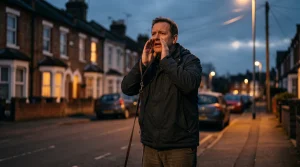
If you see a frightened loose dog, don’t chase it or try to grab it. Stay still, give it space, note exactly where you saw it and which way it went, take a photo from a distance if you can, and report the sighting to the owner or the council’s dog warden. A scared dog is more likely to run from people than come to them.
A lost dog that is scared, anxious or reactive may not behave like they normally would. They may run, hide or avoid anyone trying to help — and approaching or chasing them can sometimes make the situation worse.
If you see a frightened loose dog:
🛑 Don’t chase or try to catch them
🚶 Give them space
📍 Take note of where you saw them and which direction they went
📸 Take a photo from a safe distance if you can
📱 Report the sighting so the owner knows where their dog has been seen
How can you tell a dog is frightened?
Look at the whole dog, not just the tail. Dogs Trust lists signs of stress and fear that include:
- a lowered or tucked tail and ears pulled back
- turning the head or body away, or the whites of the eyes showing
- cowering, crouching, hiding or trembling
- sudden stillness or freezing
- not responding to words, treats or toys
- trying to run away, or in panic, lunging or snapping
A dog showing these signs is not a “naughty” dog. It is a scared one, and it may not even recognise people it knows. That is why a kind stranger walking towards it, calling and holding out a hand, can make it bolt.
Why shouldn’t you chase a frightened dog?
Because chasing usually makes them run further and faster, often without looking where they’re going. A frightened dog running from people can cross busy roads or railway lines, and each chase pushes it into less familiar ground, which makes it harder for the owner to find. Following at a walk can have the same effect. The safest thing you can be for a scared dog is a calm, quiet person who isn’t moving towards it.
What should you do instead?
- Stop and make yourself small. Crouch or sit side-on, avoid staring, and talk softly or not at all.
- Let the dog come to you, if it chooses to. Don’t lunge for the collar. If it settles near you, a dropped treat on the ground is less scary than an outstretched hand.
- Write down the details while they’re fresh: the time, the exact place (a postcode, street name or landmark), which way the dog went, and what it looked like.
- Check local lost-dog posts. Look in local Facebook lost and found groups, Nextdoor and DogLost.co.uk for a matching dog. If the owner has asked for sightings only, follow that.
- Tell the right people. If you can’t find the owner, report the sighting to your local council’s dog warden, who deals with stray dogs.
If the dog is in danger — on a motorway or a railway line, for example — call the emergency services rather than trying to catch it yourself. Never put yourself at risk.
If the dog is injured, call the RSPCA on 0300 1234 999 in England and Wales, or the Scottish SPCA on 03000 999 999 in Scotland.
What if the dog comes to you?
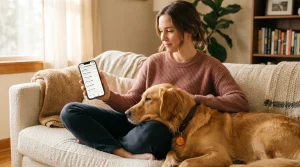
If a scared dog settles and lets you near, move slowly and check the collar for a tag. A dog tag with the owner’s name and address is a legal requirement for dogs in public in England, Scotland and Wales, so there may be details to call. If the dog wears a smart tag, such as a Taggzi, tap it with your phone or scan the QR code and the dog’s profile opens in your browser, with no app needed.
If there’s no tag, a vet can scan for a microchip free of charge. If you can’t reach the owner, you must report the dog to the council. Our guide on what to do if you find a lost pet goes through each step.
And if you’re a dog owner, having a plan in place before your dog goes missing can make a huge difference.
With Taggzi, your pet has a digital profile that can contain important information about them. If they go missing, you can activate Lost Mode directly from their profile, helping to clearly communicate that your pet is missing.
You can also generate a Lost Pet Poster directly from the Taggzi Pet Profile, giving you something you can quickly share online or use to help get the word out locally.
How Taggzi helps with frightened dogs
When we first wrote this post, we said we were exploring how Lost Mode could help with dogs who shouldn’t be approached. Those features are now built, and they’re free with every Taggzi tag:
- “Nervous” in Lost Mode. Tick it, and your dog’s lost page, the printable poster and our community lost-pet alerts show a clear warning: please don’t approach, call or chase — note where you saw them and tell the owner instead.
- “I’ve seen this pet.” Anyone who spots your lost dog can report where and when they saw them, using their phone’s location or a typed place or postcode. You get an alert straight away, and nobody has to get close.
Read more in our guide to why you shouldn’t chase a nervous lost dog.
🐶 For fearful and reactive dogs, every second and every sighting can matter.
Because sometimes the best way to help a lost dog isn’t to catch them.
It’s to give them space, report the sighting and help their owner find them. ❤️
🔗 Find out more about Taggzi: order a tag or see plans and pricing.