How to Find a Lost Cat: A Step-by-Step Guide for UK Owners

If your cat has gone missing, the most important thing to know is this: lost cats usually stay close to home. Unlike dogs, which can cover miles in hours, a missing cat is most often hiding within a few streets of where it was last seen — in a neighbour’s shed, under a car, or in dense bushes. So search near home first, slowly and more than once.
Acting quickly and methodically improves your chances of a reunion. Here’s exactly what to do.
In the first hour
Search your property first. Check every cupboard, wardrobe, under beds, in the loft hatch, and behind appliances. Cats are experts at hiding in plain sight inside their own home, especially if something frightened them.
If they’re definitely not inside, step outside and call their name calmly. Avoid panicked shouting — a scared cat may freeze rather than come to a stressed voice. Bring their food bowl and shake it; the sound of biscuits is often more effective than a name.
Search the immediate area methodically
Focus your search in a 2–3 street radius to begin with. Check:
- Under garden decking and sheds
- Inside open garages and outbuildings
- In dense hedging and under parked cars
- In any open drains or culverts
Cats that are frightened or injured may not respond to your voice, and a hiding cat often stays silent. Bring a torch even in daylight to check dark spaces, and search again after dark — many lost cats only move when it’s quieter.
Alert your neighbours immediately
Knock on doors within a 3–4 street radius. Ask neighbours to check their sheds, greenhouses, and garages — cats frequently become accidentally shut in these spaces, and may be trapped for days without anyone hearing them. Leave a photo and your phone number.
Post on local Facebook groups and Nextdoor. Include a recent photo, the last known location, and whether your cat is microchipped and tagged.
Who should you report a lost cat to?
Contact these within the first 24 hours:
- Local vets — call every practice within a few miles; ask them to check whether a cat matching the description has been brought in, and to scan any stray cat for a microchip
- Local rescue centres and cat charities — report your cat as missing so they can match it against any found cats
- Your microchip database — report your cat as missing on whichever database holds the chip registration, and check your phone number and address are current
- Lost and found pet websites — register your cat on a UK lost-pet website
Unlike dogs, stray cats aren’t picked up by council dog wardens: the council’s legal duty covers stray dogs. So vets, rescues and neighbours are where a found cat is most likely to turn up.
Is your cat microchipped and registered?
In England, every cat must now be microchipped and registered on an approved database by 20 weeks old, including indoor cats. In Scotland, Wales and Northern Ireland it’s optional but strongly recommended. If your cat is chipped, a vet or rescue can scan it and look up your details — but only if those details are up to date. If you’re not sure which database your cat is on, GOV.UK has a tool to find out.
Where should you put up lost cat posters?
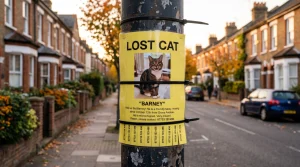
A well-made poster should include a clear photo (preferably showing markings), the cat’s name, your contact number, and the area where they went missing. Laminate them if possible — UK weather is not kind to paper.
Put them on lamp posts, community noticeboards, vet waiting rooms, and pet shops. Aim for a 5–6 street radius. Taggzi creates a printable lost poster for you when you switch on Lost Mode.
Keep checking
Keep searching the same areas repeatedly rather than expanding your radius too quickly — a cat that was too scared to come out yesterday may answer today. Keep leaving food and a worn item of your clothing outside; the familiar scent helps guide them back.
Don’t give up after a week. Cats have been known to return home weeks or even months after going missing, and a cat that has been fed by someone else may be “found” much later.
Ask about cats that have moved in nearby
Friendly cats are often taken in by kind neighbours who assume they’re strays. Ask people a few streets away whether a new cat has started visiting or moved in. A collar tag, especially a smart tag they can scan, makes it far more likely that someone in that position knows your cat has a home.
How a smart tag helps if someone finds your cat
If your cat is wearing a Taggzi NFC + QR collar tag, anyone who finds them can tap or scan the tag to reach you straight away — even if they’ve never heard of Taggzi. There’s no app to download and no form to fill in. The tag weighs about 3 g, so it suits a quick-release cat collar.
You can also mark your cat as lost, which switches their profile to an emergency page, gives you a printable poster and tells people nearby who have signed up for free community lost-pet alerts. A finder who spots your cat but can’t catch it can report a sighting from the same page.
When you go to collect your cat, Taggzi Pro subscribers can show their Verified Owner badge in the app — a quick way to confirm you’re the tag’s registered owner before the finder hands over your pet.