What to Do If You Find a Lost Pet in the UK
If you find a lost pet in the UK, check the collar for a tag first and contact the owner if you can. If there’s no way to reach them, a vet can scan for a microchip free of charge. For a dog, the law says you must return them to the owner or report them to the local council straight away. Here is exactly what to do.
From Steve: I've been the finder. I took a pet I'd found to a local vet so they could scan for a microchip. It's the right thing to do, but it depends on the vet being open, and that's the gap a tag the finder can use on the spot fills.
Step 1: Check for a tag or chip
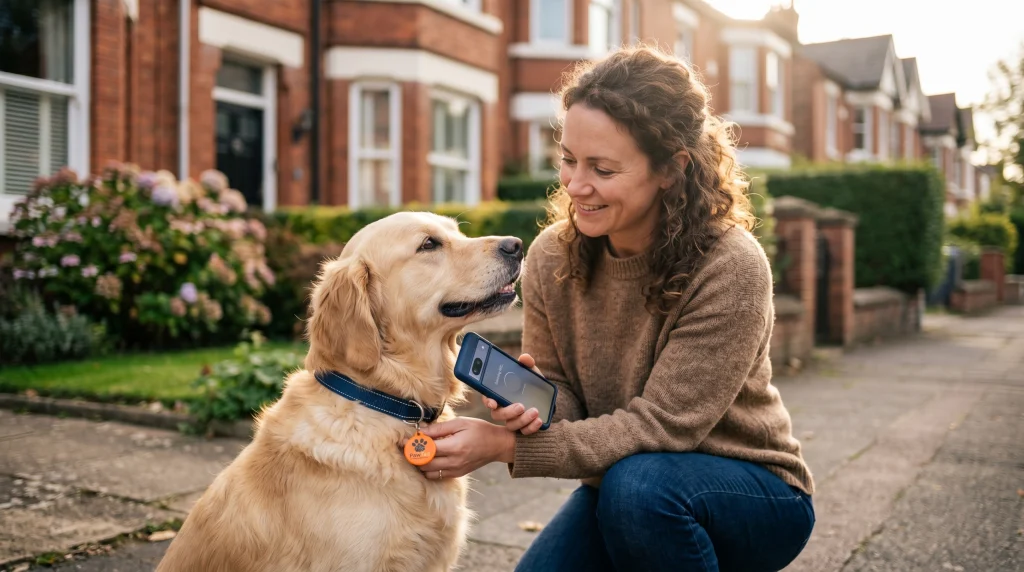
The first thing to do is check the animal’s collar for a tag. In England, Scotland and Wales, dogs in public must wear a collar tag with the owner’s name and address, so many dogs have an engraved tag. Modern smart tags — like a Taggzi — also have a QR code or NFC chip. Tap your phone against the tag or scan the QR code and you’ll be taken straight to the owner’s contact page.
If there is no tag, or the details are out of date, ask a local vet to scan the animal for a microchip. Vets scan free of charge. Dogs and cats in England must be microchipped by law, so there’s a good chance the animal has one.
Step 2: Keep the animal safe
If the animal is calm and friendly and it’s safe to do so, keep them with you while you look for the owner. Don’t put yourself at risk. If a dog is frightened or aggressive, keep your distance, note where they are and call the council’s dog warden. Don’t chase a frightened dog: it can push them into a road.
If the animal is injured, call the RSPCA on 0300 1234 999 in England and Wales, or the Scottish SPCA on 03000 999 999 in Scotland. The RSPCA says it can’t collect healthy stray dogs; those are the council’s job.
Don’t hand an animal over to anyone without checking they are the owner. Ask for photos, vet records or the microchip paperwork, and keep back a detail only the owner would know.
What does the law say if you find a stray dog?
You must act straight away. Under section 150 of the Environmental Protection Act 1990, anyone who takes in a stray dog must either return it to its owner or take it to, or report it to, the local council, and tell the council where it was found. GOV.UK puts it simply: if you cannot contact the owner, you must report the dog to the council.
If you want to keep the dog while the owner is found, tell the council. The Act says a finder who keeps a stray dog must keep it for at least one month. In Scotland, the finder can also take the dog to the nearest police station.
Step 3: Report it
Report the found animal to:
- Your local council’s dog warden — every council must have an officer who deals with stray dogs, and owners of lost dogs are told to report to the warden
- Local vets and rescue centres — owners often ring round when their pet goes missing
- DogLost.co.uk or Nextdoor — community lost and found boards
- Local Facebook groups — “Lost and Found Pets [your town]” groups are very active
Step 4: Post locally
Post a clear photo in local community groups with where and when you found the animal. Don’t post your phone number publicly — ask for private messages.
What if you’ve found a cat?
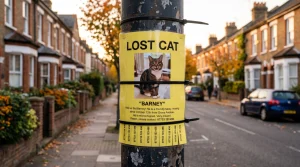
Cats are different. Many cats roam well beyond their own garden, so a cat sitting on your wall may not be lost at all. International Cat Care advises that if a cat is friendly and seems healthy, you can put a paper collar on it with your phone number and a note for the owner, then leave it where you found it. Leave part of the paper uncovered by tape so it tears off if it catches.
If the cat is thin, injured, or keeps hanging around for days, take it to a vet for a free microchip scan, and contact a local cat rescue. A very fearful cat may be feral and is usually best left where it is. The council’s stray service covers dogs, not cats.
Step 5: What if no owner is found?
For a dog, the council takes over. Under section 149 of the Act, if the warden seizes a dog with an address on its collar, the council must write to the owner. If the dog isn’t claimed within seven clear days, the council can rehome it. If you’d like to give the dog a home, leave your details with the warden. For a cat, a local rescue can advise on the next steps.
How NFC tags make this instant
The problem with traditional engraved tags is that phone numbers change, owners forget to update them, and tags wear down over time. A Taggzi works differently — the owner’s details live online and the owner can update them at any time. A finder taps the tag or scans the QR code (no app needed) and the pet’s profile opens. See how NFC pet tags work.
From the profile you can message the owner privately, and call them if they show their number. If you’ve found a pet with a Taggzi, you can also press “I found this pet” on the profile page to alert the owner straight away, and choose whether to share your location. If the pet has been marked as lost, the page shows a clear lost banner, and you can report a sighting with “I’ve seen this pet” even if you couldn’t get close.
Before handing a found pet back to someone who claims to be the owner, ask them to show their Taggzi Verified Owner card in the app. It’s available to Taggzi Pro owners with a verified email address, and it confirms that the person collecting is the tag’s registered account holder — not just someone who saw the lost pet post.