What Happens When a Stranger Finds Your Pet?

When a stranger finds your pet, what happens next depends on what your pet is wearing. With no tag, the finder has to go to a vet for a microchip scan or post online and wait. With a smart tag like Taggzi, they tap it or scan the QR code, your pet’s profile opens on their phone, and they can message you straight away.
From Steve: When I found someone's pet, I took it to a vet to scan for a microchip. Taggzi is meant to make that first step quicker: the finder taps the tag and can reach the owner there and then.
A gate left ajar. A firework going off at the wrong moment. One minute your dog or cat is in the garden — the next, they’re gone. While you’re at work or simply in another room, someone else may already have found them: a neighbour, a dog walker, a delivery driver.
The finder’s first few minutes
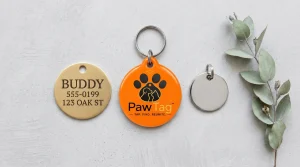
Most people who find a lost pet want to help. They’ll crouch down, check for a collar, and look for some way to find the owner. If there’s no tag — or just a worn metal disc with an unreadable phone number — they’re stuck. They might post on a local Facebook group, take the pet to a vet to scan for a microchip, or simply take them home and hope someone puts up a poster.
Each of those steps takes time. Hours. Sometimes days. With a smart tag, the finder can reach you in the time it takes to open a web page.
What does the law expect of the finder?
For dogs, the finder has to act straight away. Under section 150 of the Environmental Protection Act 1990, someone who takes in a stray dog must return it to its owner or take it to, or report it to, the local council. GOV.UK says the same: if the finder can’t contact the owner, they must report the dog to the council. So if your dog’s tag puts the finder in touch with you, your dog can come straight home instead of going to the council’s kennels. Your dog still needs the engraved tag the law requires and an up-to-date microchip — see our guide to dog ID tag law. A smart tag sits alongside them.
What does the finder see when they scan a Taggzi?
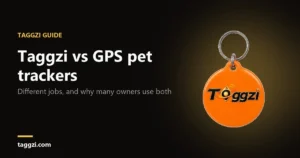
They see your pet’s profile page, in their phone’s browser, with no app needed. A Taggzi is a small, light orange metal tag that hangs on your pet’s collar. When a finder holds their phone against the tag, the NFC chip opens the page. There’s no battery to run flat.
That page shows them what they need:
- Your pet’s name, photo and breed — so they know straight away they have the right animal
- Any medical notes you choose to show (allergies, medication, conditions that need mentioning)
- A button to message you privately — messages go through Taggzi, so your phone number stays private unless you choose to show it
- Your home address only if you choose to show it
There’s no account to create, no app to download, no long form to fill in. The finder just taps and sees. If they want to get in touch, they press a button and a message comes straight to you. They can also press “I found this pet” to tell you your pet is safe, and choose whether to share their location.
Your phone lights up
When a finder messages you or reports that they’ve found your pet, you get a notification. You know your pet has been found. If the finder shares their location, you know where. You can reply and arrange collection — all without giving a stranger your number.
With Taggzi Pro, you also get an alert every time the tag is scanned, with the approximate location of the scan, even if the finder doesn’t send a message. Pro owners can also take private voice or video calls from the finder, without either side sharing a phone number.
What about the QR code?
Every Taggzi also has a QR code printed on it — for phones without NFC, or with NFC switched off. The finder points their camera at it. Same result: the profile opens and they can contact you. The finder doesn’t need to know which method they’re using. Read more about how NFC pet tags work.
If your pet is marked as lost
If you’ve switched on Lost Mode in the Taggzi app, the profile page changes. The finder sees a clear alert: this pet is lost and their owner is looking for them. The page can show where your pet was last seen, any reward you’ve offered, and an emergency contact you’ve added, in case the finder can’t reach you. People who spot your pet but can’t get close can report a sighting with “I’ve seen this pet”.
Taggzi also makes a lost pet poster you can print or share, and community alerts let people nearby know your pet is missing. Lost Mode, the poster and alerts are all on the free plan.
How does a finder know they’re returning to the right person?
They can ask to see your Verified Owner card. Handing a pet back to a stranger requires trust on both sides.
Taggzi Pro subscribers with a verified email address get a Verified Owner badge. When you go to collect your pet, you can show the finder your Verified Owner card in the Taggzi app, which confirms that you’re the registered account holder behind the tag. Community alert emails sent to people in your area when your pet goes missing specifically advise finders to ask for this card before handing over.
A small detail that matters.
The difference preparation makes
You can’t control whether your pet escapes. Gates fail. Fences get gaps. What you can control is how quickly a finder can reach you when it happens. A Taggzi works for whoever finds your pet, on almost any phone, and you can update it whenever your details change.
By the time the finder has read the profile and sent a message, you might still be at your desk. And your pet is on the way home. Order a Taggzi tag.